

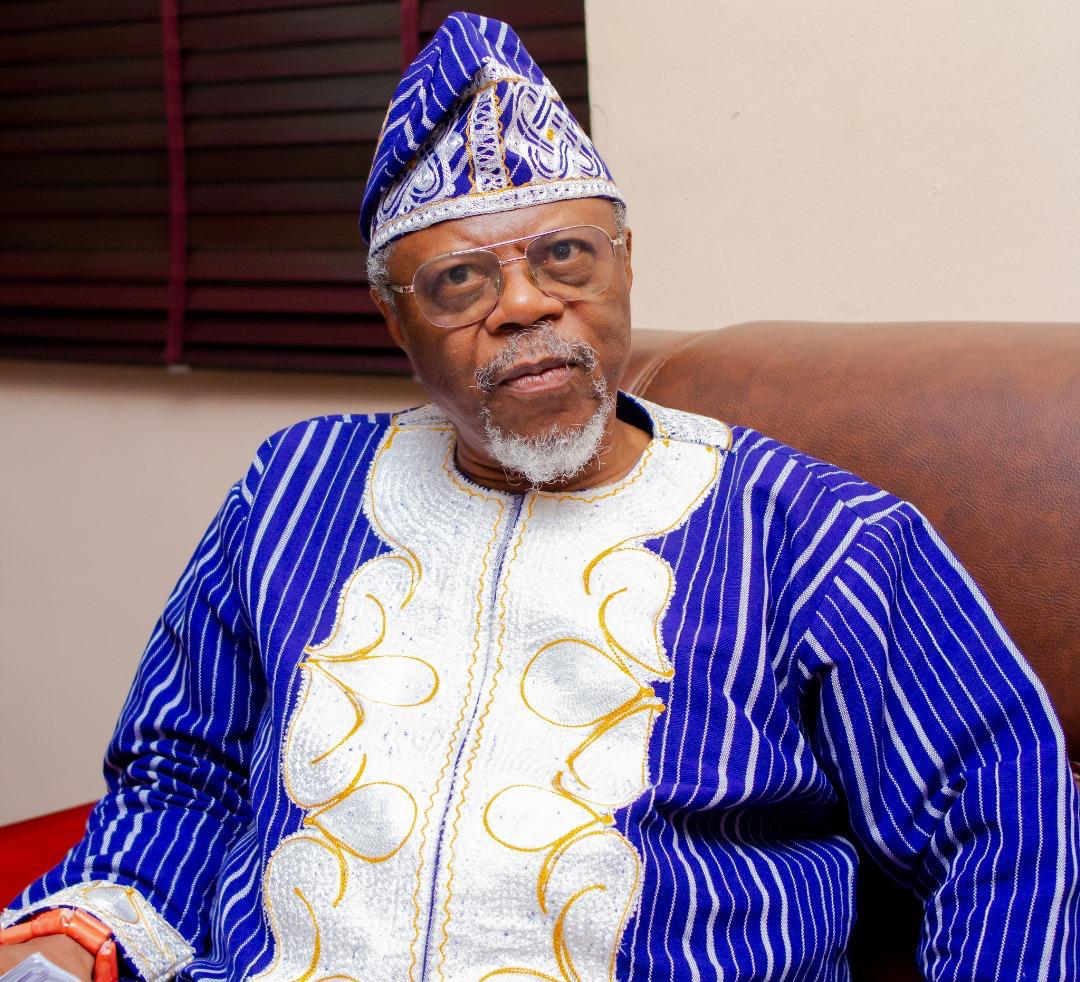
Globally celebrated historian and public intellectual, Professor Toyin Falola, whose scholarship has shaped generations of African and diaspora studies, has said the Russia–Ukraine war has starkly exposed Africa’s hidden dependence on global food systems and its vulnerability to distant geopolitical conflicts.
Falola, widely regarded as one of Africa’s most influential thinkers, made the remarks while delivering a sweeping, historically grounded intervention at the February edition of Diaspora Dialogue, themed “Being African in the Age of ICE Raids.” The event was moderated by Dr Osmund Agbo, Professor Farooq Kperogi and Professor Moses Ochonu.
Drawing from his trademark blend of history, geopolitics and lived African realities, Falola challenged Africans to rethink the illusion that global crises can be neatly separated from everyday life on the continent.
“We tend to fragment reality,” Falola observed. “If Russia attacks Ukraine and you are living in Tanzania, you assume that it is none of your business. You have forgotten that Ukraine produces a significant percentage of the world’s grain that you consume.”
According to him, the Ukraine war has punctured this false sense of distance, making clear that Africa’s food systems are deeply enmeshed in global supply chains. The rising cost of food and shortages recorded across many African countries since the war began, he said, are direct consequences of that entanglement.
“You must realise that one way or another, what happens in Ukraine will affect you,” Falola stressed. “If people think this will not affect them, then they do not understand how geopolitics works.”
He argued that while geopolitics may appear abstract, its effects are felt most sharply by ordinary people. “The common man may not speak the language of international relations,” he noted, “but he understands when bread becomes expensive and food disappears from the market.”

Falola also highlighted how Africa’s presence in global crises often remains invisible until catastrophe forces it into view. Using Ukraine as an example, he disclosed how the war revealed overlooked African migration patterns.
“It was when the war broke out that I learnt that there were about 10,000 Nigerians in Ukraine,” he said. “I never knew that. Africa is always present globally, but its presence only becomes visible when there is tragedy.”
While acknowledging that oil-producing countries like Nigeria might benefit temporarily from higher global energy prices triggered by the conflict, Falola warned against mistaking revenue increases for development.
“With this, Nigeria will see an increase in its oil revenues; it may even be immediate,” he said. “But if you don’t have development as your agenda, no amount of money you get can generate that development. Money cannot do structural re-engineering for you.”
He cautioned that without structural planning, such windfalls only deepen inequality. “You will end up merely distributing that money to your colleagues in the political party,” Falola said, “while the common man sees only price increases.”
Extending his analysis beyond Eastern Europe, Falola situated the Ukraine war within a broader web of global instability, including tensions in the Middle East, warning that Africa is inevitably caught within these overlapping corridors of power, religion and trade.
“Where Iran is located in its region is connected to Africa,” he explained. “Dubai is a hub. It has closed its airport since the attack on Iran. If we understand the map very well, there are corridors that will be affected if that region is destabilised.”
He traced historical and cultural linkages that allow crises to travel across regions. “The area called Borno State, which has Boko Haram, is linked to Darfur,” Falola said. “People used to trek from that place during pilgrimage to Darfur. This US–Israeli/Iran crisis will get to Sudan because of links to the Horn of Africa.”
On the broader theme of the dialogue, Falola spoke forcefully about the experience of being African in the United States amid racial hostility and aggressive immigration enforcement. He condemned racist rhetoric associated with former US President Donald Trump, insisting that intellectual honesty demands moral clarity.
“I don’t think we can discuss this topic being gentle,” he said. “Describing Obama and his wife as apes is unacceptable. In a moral, decent society, that alone should be impeachable.”
He lamented the silence that often surrounds the persecution of African communities abroad. “We tend to operate in silences in our silos,” Falola observed. “If they are coming after you in Austin, the first thing you do is not to tell your best friend. That silence creates fear in our communities.”
Citing data on visa scrutiny, asylum restrictions and deportations, he noted that Africans from countries such as Algeria, Ethiopia, Ghana, Cameroon and Senegal are increasingly affected, even if public attention remains elsewhere.
Falola also interrogated why societies repeatedly empower leaders whose actions undermine their own interests, drawing parallels across African, European and American histories.
“There is a popular African proverb which says that you can use your own hands to destroy yourself,” he said. “If you study Mussolini and Hitler, or look at Idi Amin and Mugabe, you will see the same historical pattern.”
Returning to the core lesson of the Ukraine war, Falola emphasised that modern sovereignty is now inseparable from food security.
“We have now introduced the concept of food security in the literature,” he said. “When there is mass suffering and hunger, people begin to question the legitimacy of the state.”
For Falola, the message was clear: Africa can no longer afford the comfort of distance.
“What is going on today is very tragic,” he concluded. “Food, energy, migration, security — they are all connected. Africa must understand this interconnected world, or continue to be shocked by events it once believed were none of its business.”


